

Safe and Cautious School Reopening
Physically and psychologically securing the administration, faculty and supporting staff is of utmost importance. By setting appropriate COVID-19 safety procedures for all adults working in schools, colleges and universities, the children and all who enter will find an organized, sanitized and safe environment conducive to safety and comfort in teaching and learning as well as working. The suggestions that follow along with CDC guidelines, regional, city and state regulations and laws should further support the process for the safe and cautious reopening of all learning institutions.



Like dads, moms, grand-parents and other caregivers know their kids,
teachers and professors know their students.

Morning Routines & Logistics
The first two weeks of school for the upcoming 2020 fall semester will pose one of the most challenging aspects of school reopening in history, post-COVID-19. The arrival of students in the morning and the readiness of
school staff to accept the youngsters quickly, efficiently and safely will make all the difference.
Most city, state and regional school districts have written regulations that forbid the refusal of any child under 16 years of age from entering school once they have reached the gate. For this reason, it is imperative that school districts notify parents of their "COVID-19 safe school guide" early. This should include checking their children for fever and other ailments before they leave home as well as other clear expectations for support from parents and caregivers.

Some Suggestions for Easier School Days
At the K-12 school level, in addition to CDC, regional, city, state and federal guidelines, the points below are provided for examination and implementation:


HOME and SCHOOL
1. Parent contact should be achieved no less than three full weeks before the first day of school. Notify parents how and when school will reopen. Explain whether school will remain fully online or that the school has adopted a hybrid model. Provide a clear overview on how the selected education model is best suited for the academic development and success of all students and the school overall.
2. Communication should include:
c. Arrival Time - Students are to arrive no
more than 15 minutes
before school time.
d. Dismissal Time - Parents
or caregivers should be on
time for students pickup.
*Most Importantly:
e. Door/Gate for AM Arrival
f. Morning lineup Area
g. Door/Gate for PM
Dismissal
h. Afternoon Holding Area
3. Appeal to parents for their strong support in preparing and training their children for all impending safety adjustments when they return to school. Parents cooperation will foster a better and more accepting understanding in their children, which should lead to good behavior and good response for strict adherence to CDC and/or regional COVID-19
guidelines. A fully cooperative student body will help immensely in suppressing and mitigating the spread of the Coronavirus. The most pressing safety components are: Hand sanitation, face masks or face coverings and face shields, social-distancing, and absolutely no loitering in hallways, staircases and restrooms.
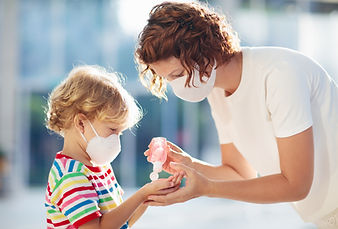
4. Although schools and school districts are expected to provide ample safety PPE supplies, parents might want to secure their children with additional personal hand sanitizers, boxes of facial tissue and extra face masks for emergencies.
5. About Face Coverings and Masks: To have young children, young adults and teachers in face masks or face coverings for more than 5 to 6 hours per day, every day, might not be comfortable and/or mentally and psychologically stimulating. Face masks/face coverings may create some issues for teachers and school administrators. Face shields, while in class, might be an equally safe alternative.




Readiness at the K-12 Schools
1. Temporary Personnel
A just allocation of teachers and ancillary staff will endure much stress and anxiety to maintain a safe and healthy school environment. Temporary ancillary personnel should be hired to help support and manage children moving in hallways and staircases as well as monitoring cafeterias, bathrooms and yards. The most problematic areas in any large urban inner-city school are its cafeteria, BATHROOMS and yards.
Hiring temporaries should be guided by the need for people with strong but positive children-centered management skills. Newly retired teachers and other school-based staff should be given priority, for there will be no need for training.
Each and all RESTROOMS that are in use must be monitored continuously, especially in primary and middle schools. This restroom monitor also monitors all nearby halls.
Having sufficient personnel will help in supporting a more normal school atmosphere.
2. PPE and Building Cleaning Supplies

a. Infrared Handheld Thermometer - Each teacher should have their own. This will facilitate the smoothest and the quickest TEMPERATURE CHECK and entrance at the start of the school school day. Each teacher is responsible for their class roster of students. Teachers, like moms, will be able to TEMPERATURE CHECK children throughout the day that they deem may not be acting like themselves.
b. Age and size appropriate face masks, face coverings and FACE SHIELDS for students and all school-based teachers and administration and ancillary staff. As long as proper social-distancing is applied - being practiced - in all classrooms, teachers and students will FEEL much better when only wearing the FACE SHIELD. Teachers and students must be made comfortable, not confined for five, six or more hours.
c. Boxes of latex gloves are to be disseminated to all teachers and staff before the first day of school.
d. Able to Close Lunch Plates - Lunch Plates with lids so children can pickup their lunch plates, close the lid to walk back to their classroom to eat lunch. Small bags for milk, fruits and utensils will be useful. These items will help keep schools much cleaner, which provides maintenance workers more of their time to focus on sanitizing the building.
e. Sanitizing Gel Units strategically installed on walls throughout the building.
f. Sanitizing Gel Bottles for classrooms and offices.
g. Toilet Paper, Hand Soap and Paper Towels to be well-stocked in ALL BATHROOMS at all times.
h. Ample Cleaning Supplies for overall building maintenance.
Just a sample...
3. Heating, Cooling and Ventilation Systems


Air ducts and/or vents should be cleaned throughout and all filters replaced. Filters will likely need to be changed monthly through the duration of the pandemic or until it is controlled.
Window air conditioning units should also be properly cleaned, all filter replaced and/or replace all missing filters.
Each classroom should also be equipped with an appropriate CADR rated AIR PURIFIER and/or other AIR CLEANING units that can cover the square footage of the room.
4. Health and Welfare Professionals
To maintain a good sense of normality in all schools, children and staff may need mental, psychological and health support. Support by encouragement and positive reassurance should be available when any child needs a person other than their teacher and/or family member with whom to talk or ask for help.
At least for the duration of the pandemic, the specialists below would be very helpful:
- One Licensed/Certified Guidance Counselor
- One Licensed/Certified Social Worker
- One Registered Nurse
- and depending on the size of the school, One Health Aide
5. Suspected Covid-19 - Isolation Room

This special ISOLATION room should be staffed with an employee at all times. The employee can be a Health Aide.
The room should be equipped with a bathroom, all necessary PPEs, cleaning supplies, chairs and cots.
6. An Additional Maintenance Worker and/or Overtime Hours
Because of the medical complications associated with Covid-19, schools should be properly disinfected daily. Due to this urgency, if not an additional full-time employee, overtime hours should be appropriated to the stars of the maintenance crew, the highest performing members on staff - those who do not need direct supervision or prodding.
a. Day Support - All restrooms should be cleaned, sanitized and reset every two hours or sooner, especially bathrooms in or nearer to the cafeteria or yard areas. Staircase railings should be wiped and sanitized hourly, especially the heavy traffic areas.
b. Night Support - Deep cleaning nightly. All floors, bathrooms, hallway walls, door knobs, cafeteria, gymnasiums and auditoriums - if in use - should be washed down/wiped and sanitized.
7. Covid-19 Testing and Results
a. Appropriate school district protocols for private testing of education employee and student, testing location within the school district, and priority for testing should be made available to all school-based staff.
b. Test Results should be immediate. If not, less than 24 to 36-hours would be optimal to minimize the need to disrupt and close schools at each possible false alarm.
Happy Kids, Happy Schools
Sanitized Schools, Healthy Kids and Staff


